 Mavrora
Washing a patio without stripping the joints
Pressure takes green off stone beautifully. It also takes out jointing sand, soft mortar and the top of old concrete if you let it.
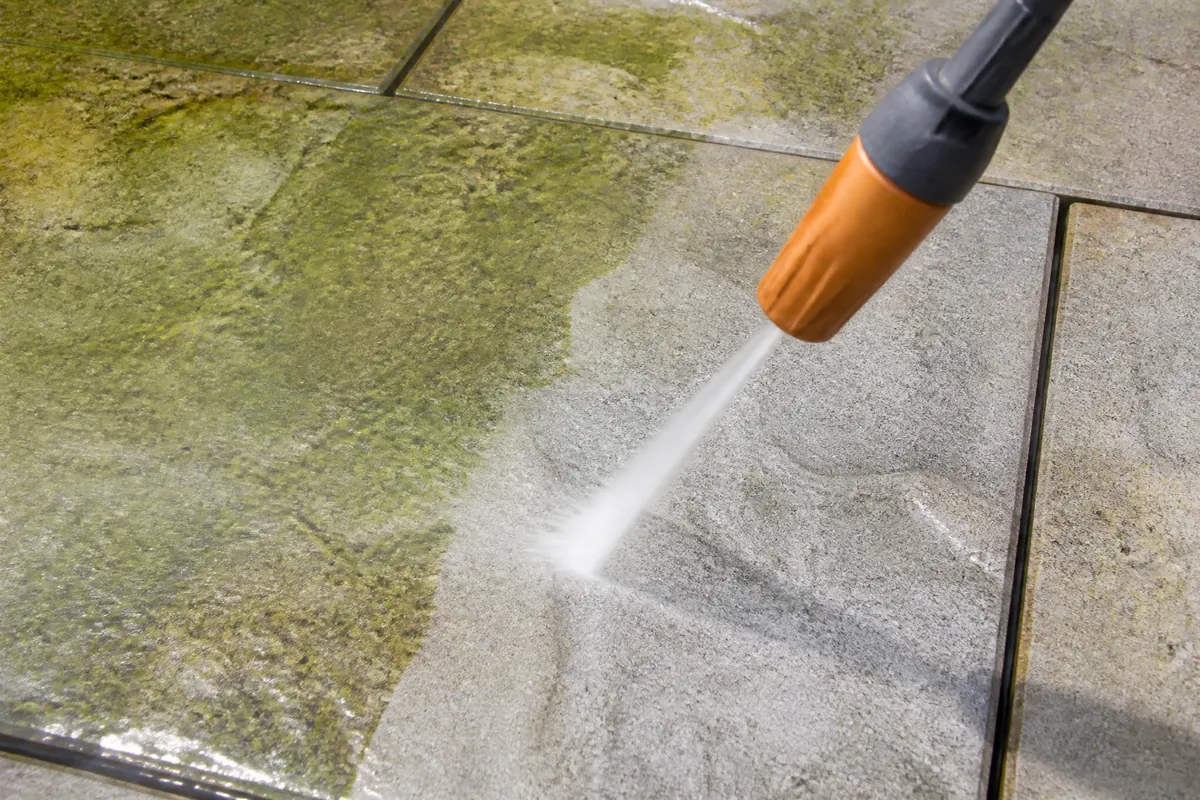
Sweep and soak first
Brush the loose material off, then wet the whole area and leave it for a few minutes. Soaked algae lifts at a fraction of the pressure dry algae needs, which is the single best way to protect the joints.
Pick the wide jet
The washer has two modes: a narrow jet for stubborn dirt and a wide one for large surfaces. Paving is a large surface. Use the wide jet for the whole job and keep the narrow one for a stain that refuses to go, held further back than feels natural.
Distance, angle, direction
- Start about 30 cm back and close in only if you must.
- Hold the lance at a shallow angle so the water sweeps dirt along the slab rather than drilling into it.
- Work in overlapping strips, always in the same direction, so you can see what is done.
- Keep moving. A jet held still leaves a clean stripe that will still be visible next summer.
Mind the joints
Sand-filled joints will wash out if you aim into them; keep the jet across the joint rather than along it, and plan to brush fresh kiln-dried sand in afterwards. Soft or crumbling mortar will go the same way – on an older patio, test one square metre in a corner before committing to the whole thing.
Water from anywhere. The five-metre hose has a filter on the end, so it will draw from a water butt or a bucket as happily as from a tap. On a patio away from an outside tap that is usually the difference between doing the job and not.
What to leave alone
- Painted or stained timber decking. A jet lifts the finish and raises the grain.
- Soft brick and old render. Both erode faster than you expect.
- Anything electrical. Outdoor sockets, lamps, doorbells, the vents on a heat pump.
- Sealed slabs. Check the sealer’s instructions first; some do not take pressure at all.
Foam for the greasy corners
The foam container is worth using where a barbecue stood or where a car drips. Foam it, leave it a few minutes, then rinse with the wide jet. Detergent and time do the work that extra pressure would otherwise have to.
Afterwards
- Rinse the hose filter – grit in it costs you pressure next time.
- Run the washer for a moment on clean water to clear the line.
- Brush new sand into open joints once the slabs are dry.
- Charge both batteries before the machine goes back in the shed.
The tool in this note is our Cordless Pressure Washer 48V, €69.99 delivered.
Last updated 23 September 2026